
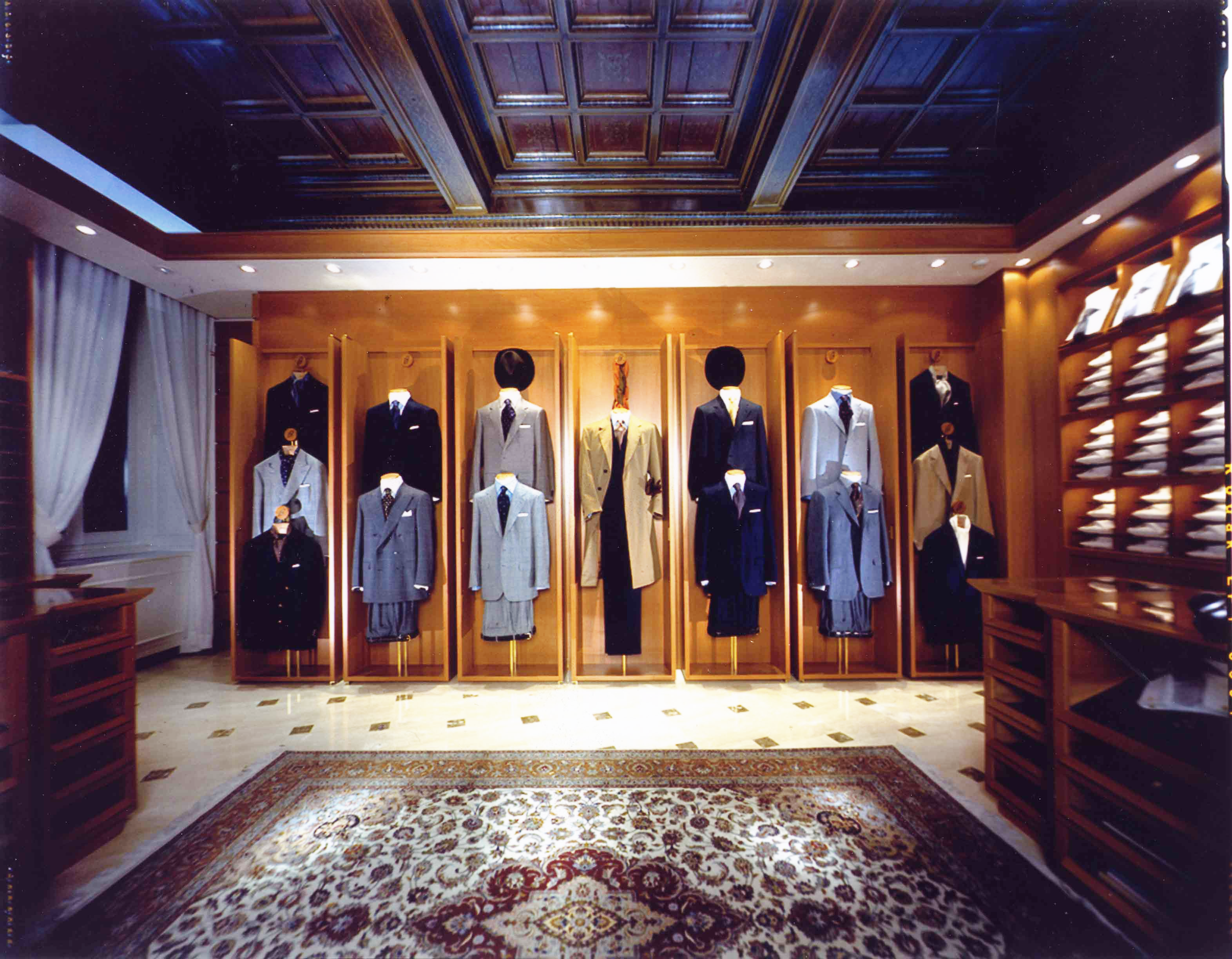
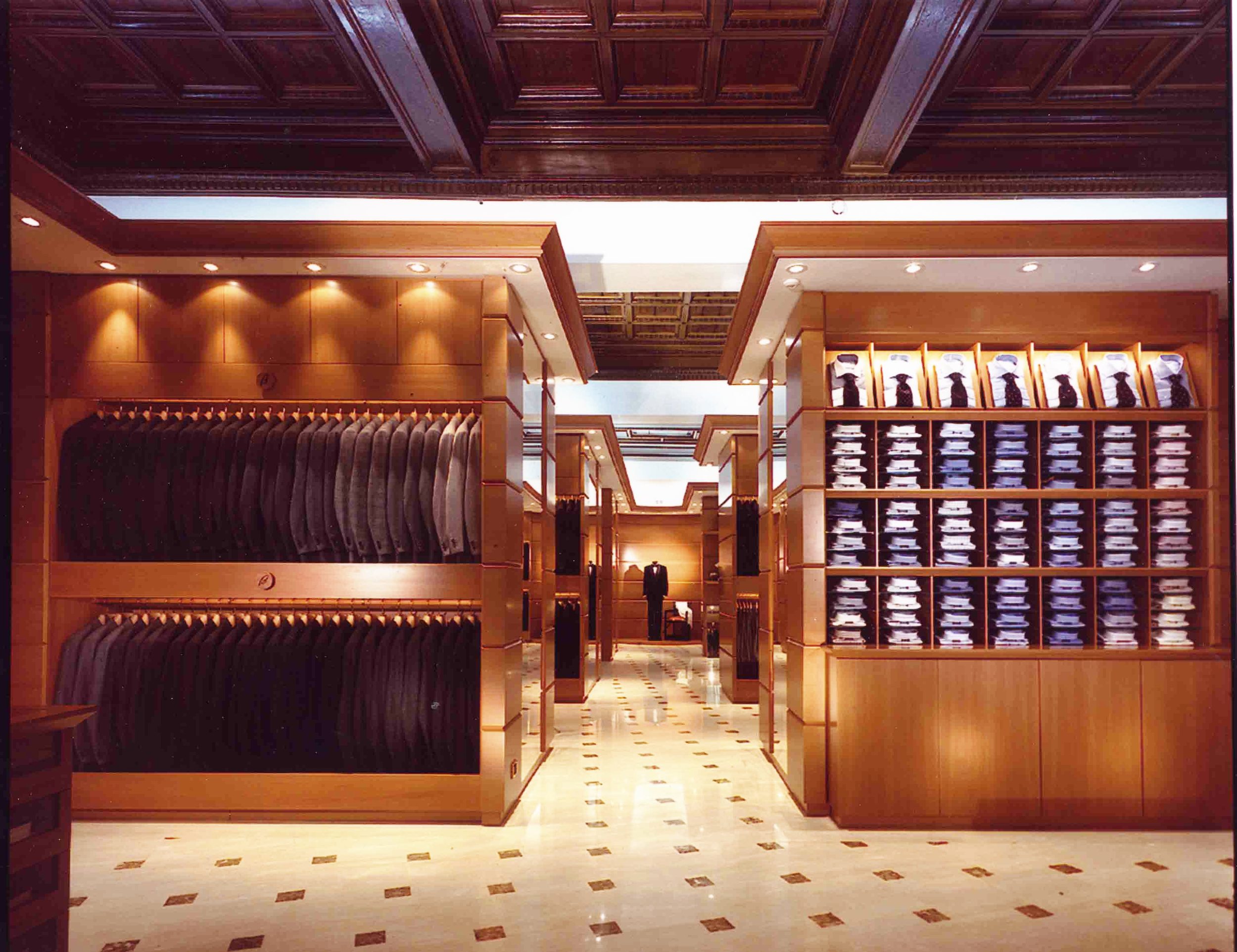
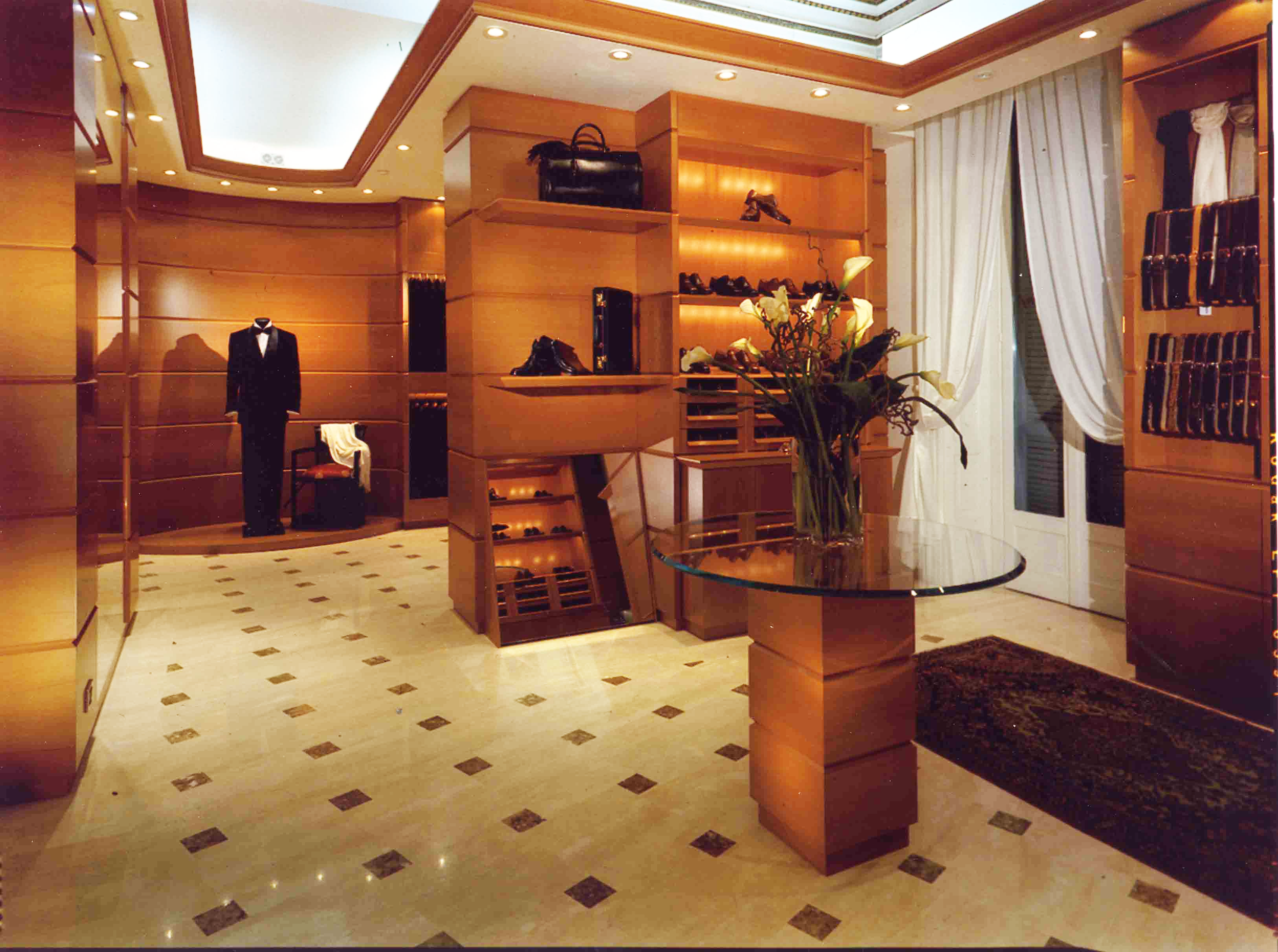
The Brioni flagship store in Milan was conceived as an architectural and furniture-based interior rather than a conventional retail environment. Located on Via Gesù, opposite Via Montenapoleone, the project involved the adaptive reuse of a nineteenth-century building formerly occupied by a small antique shop. The design strategy balanced contemporary retail requirements with a respect for Milan’s traditions of craft, tailoring, and material refinement.
Custom wood fixtures were designed as integral architectural elements. Cabinets, walls, and display systems were conceived not as static cases but as active components of the space—hinged, layered, and often concealing secondary functions. Storage was embedded within walls and millwork, allowing garments to be presented with clarity while maintaining depth and reserve. The intention was for the store to be experienced as a continuous interior rather than a sequence of departments.
Material selection was deliberately restrained. Pear wood paneling, travertine floors, and matching fixtures established a calm, luminous envelope against which tailored clothing could register with precision. The spatial organization encouraged movement and discovery, allowing customers to engage with the full range of Brioni’s offerings without rigid stylistic or hierarchical boundaries.
Furniture designed for the project—including tables and seating—extended this architectural logic. These elements were conceived as objects of use rather than display, reinforcing the idea that craftsmanship, proportion, and material intelligence operate at both the scale of the room and the scale of the hand. The Milan store served as a prototype for subsequent Brioni locations internationally, establishing a model in which architecture, furniture, and tailoring function as a unified discipline.
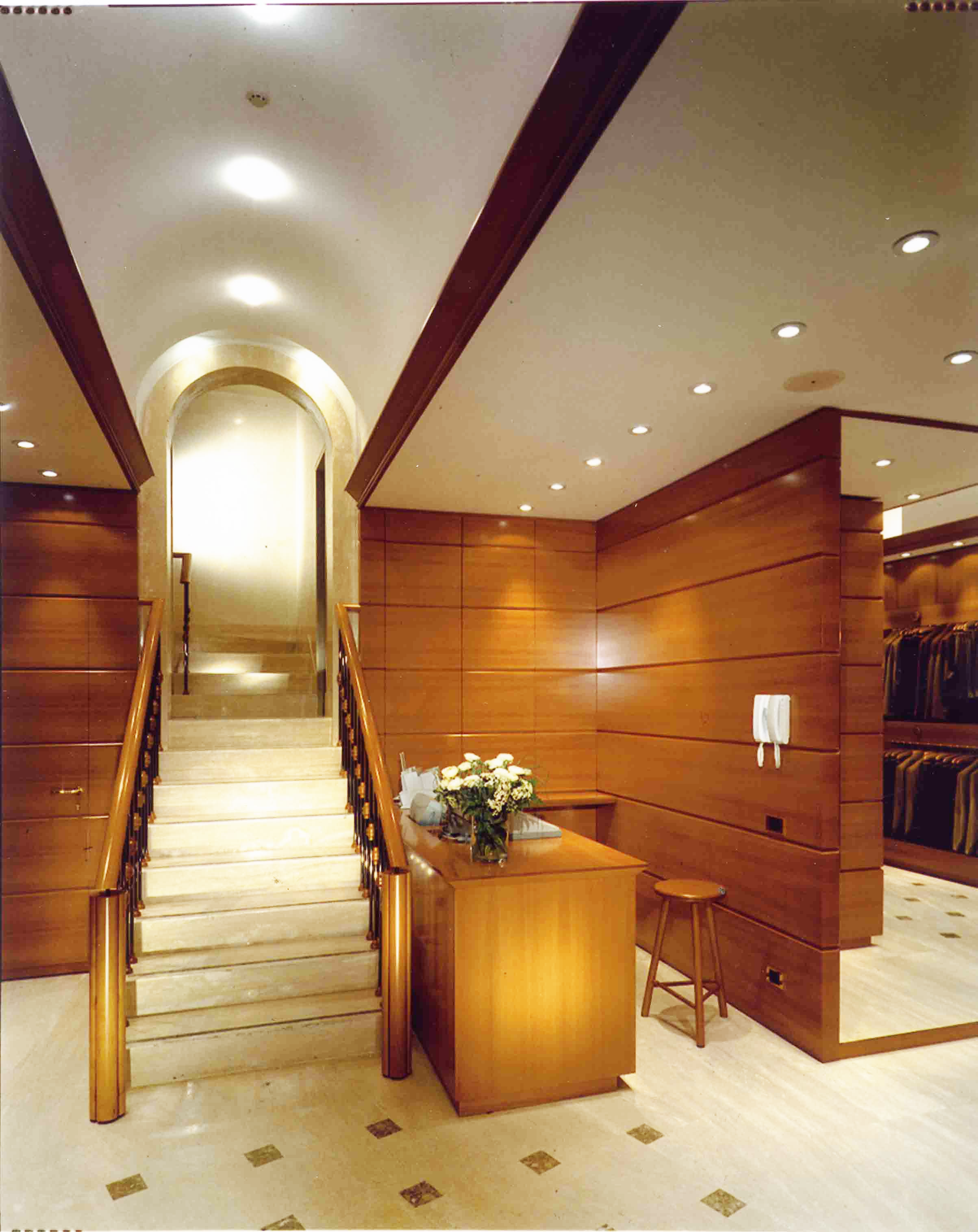
Brioni flagship store, Milan.
Stair and reception area with custom desk and three-legged artist stool.