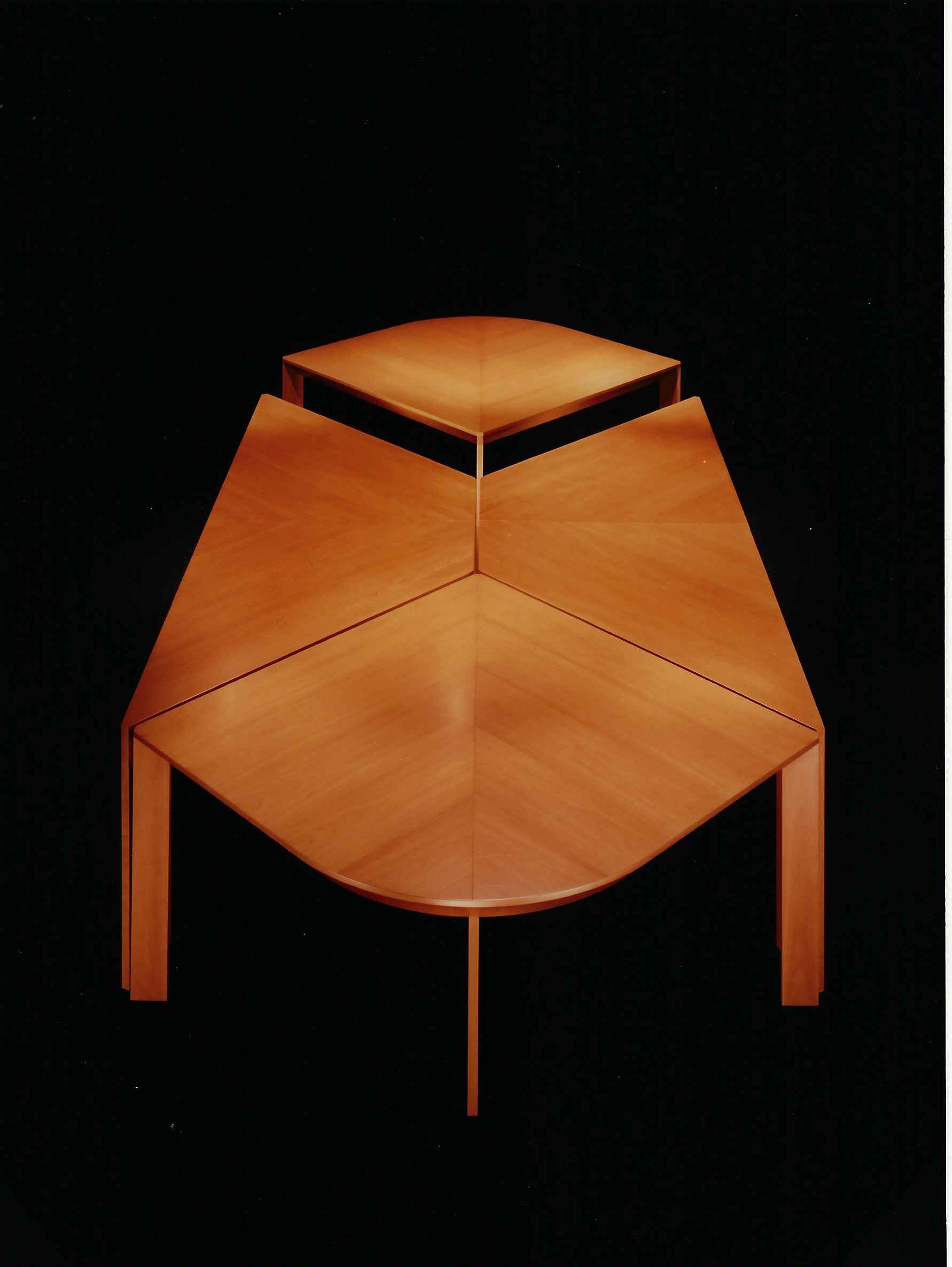
Pear wood table, Milan.
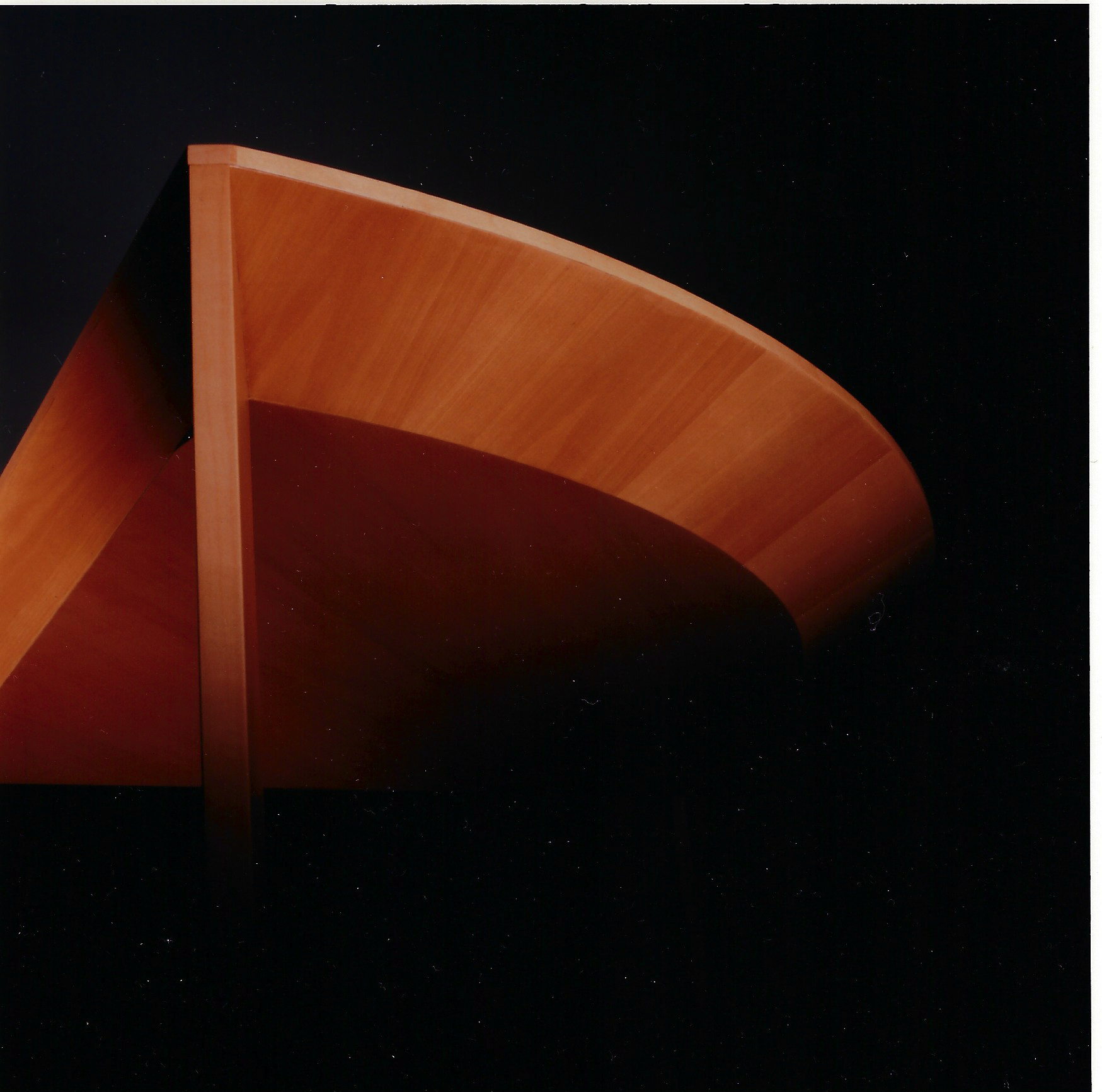
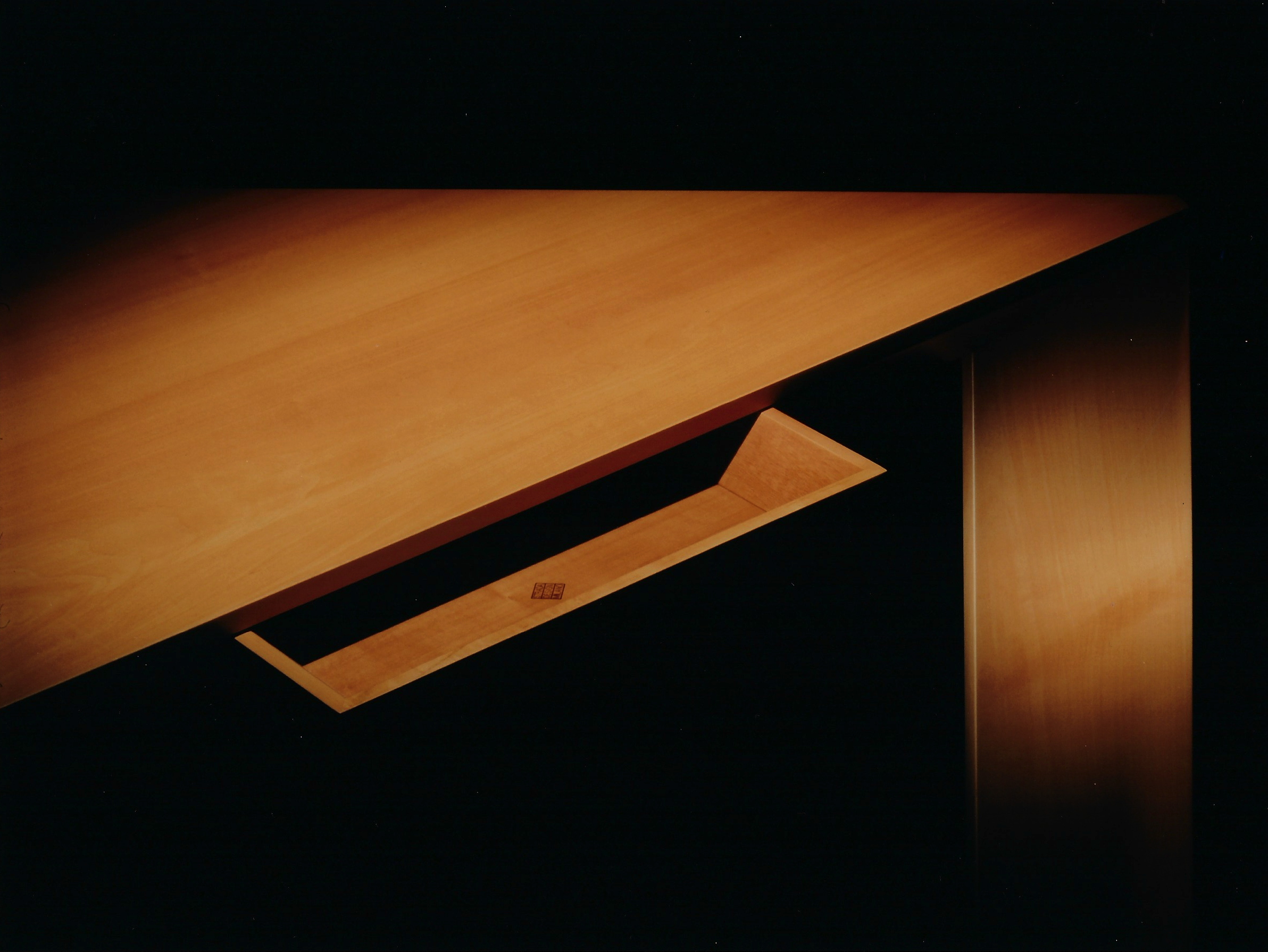
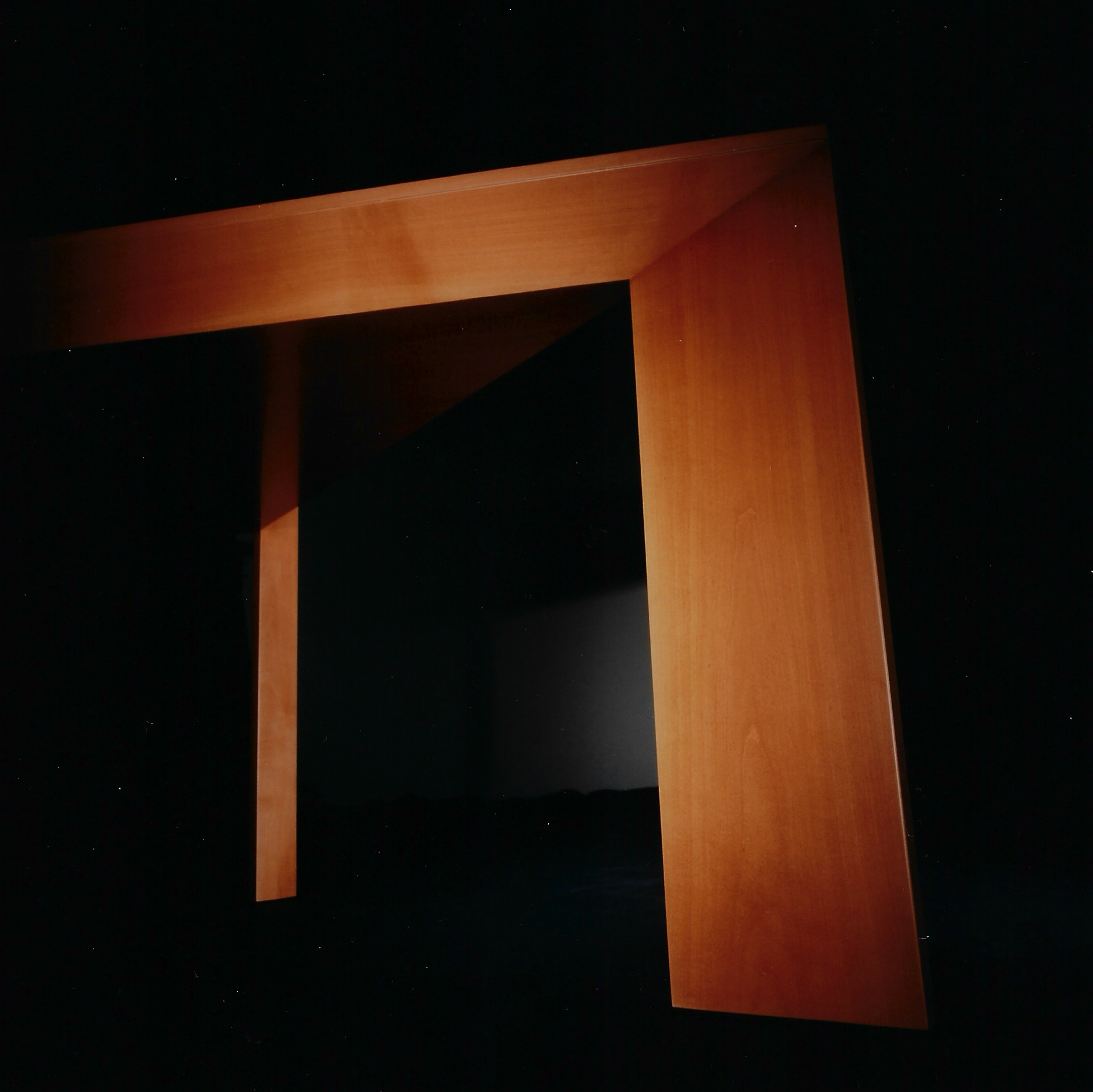
Detail of curved edge and structural support.
Furniture
My interest in furniture is a parallel practice to my work in architecture and design. This section is in active development and will document selected furniture designs produced in collaboration with Italian master craftsmen, including work made with Pier Luigi Ghianda in his studio in Bovisio and pieces manufactured by Cassina. The focus is on objects conceived alongside architectural projects, where proportion, material, and use are closely considered.
Additional projects, drawings, and photographic documentation will be added as this archive is expanded. More information and images will follow in Spring 2026.
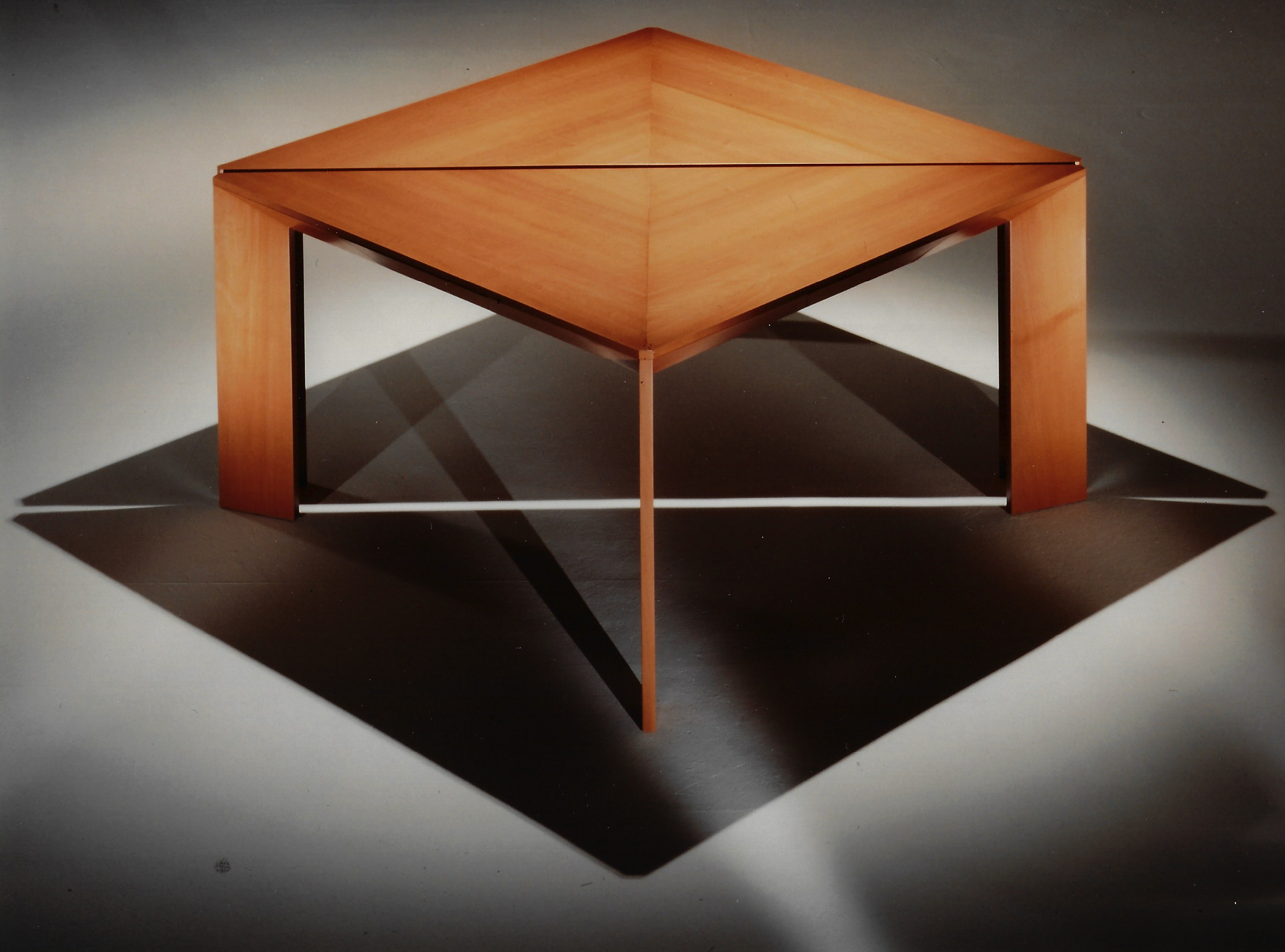
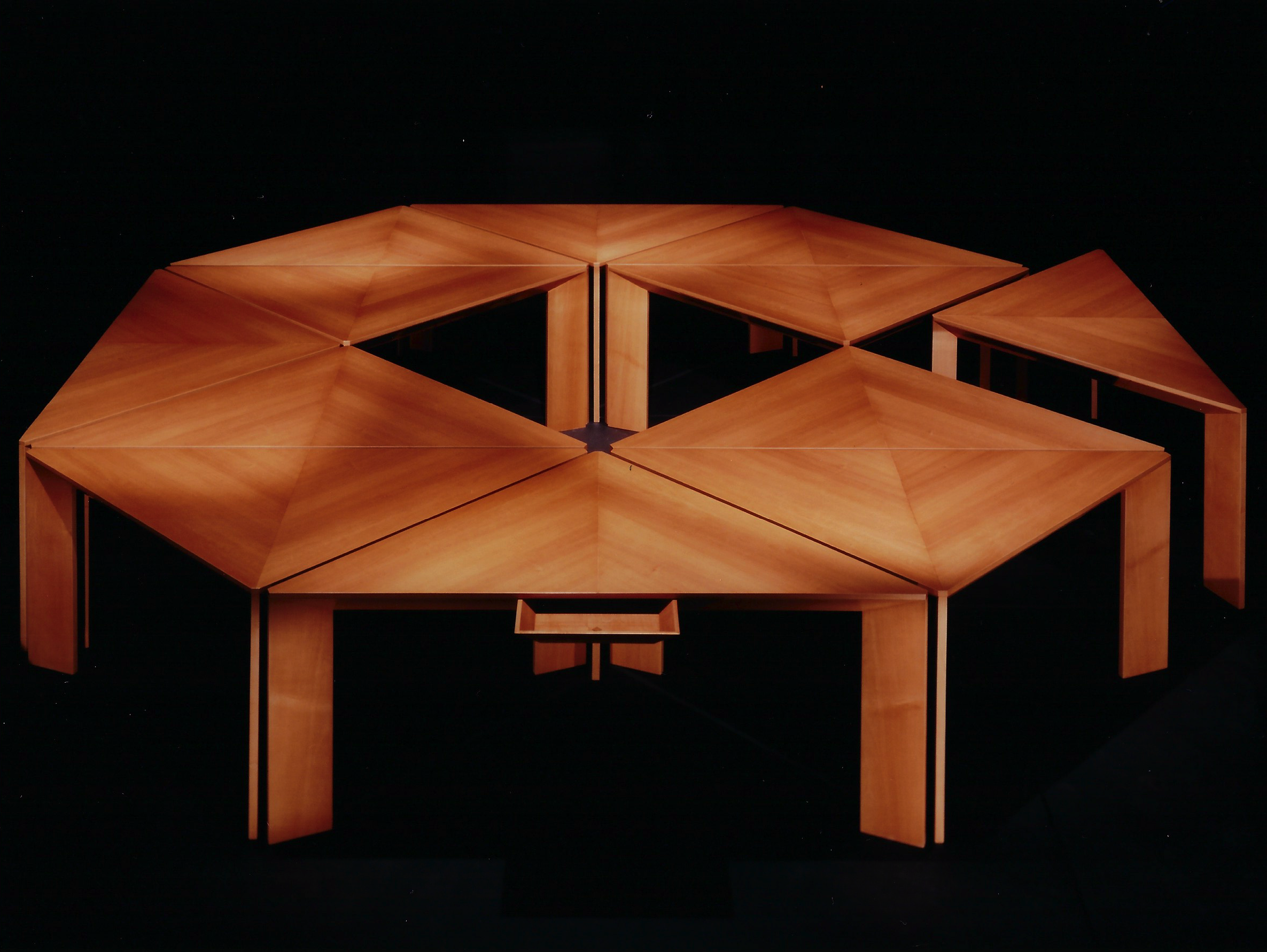
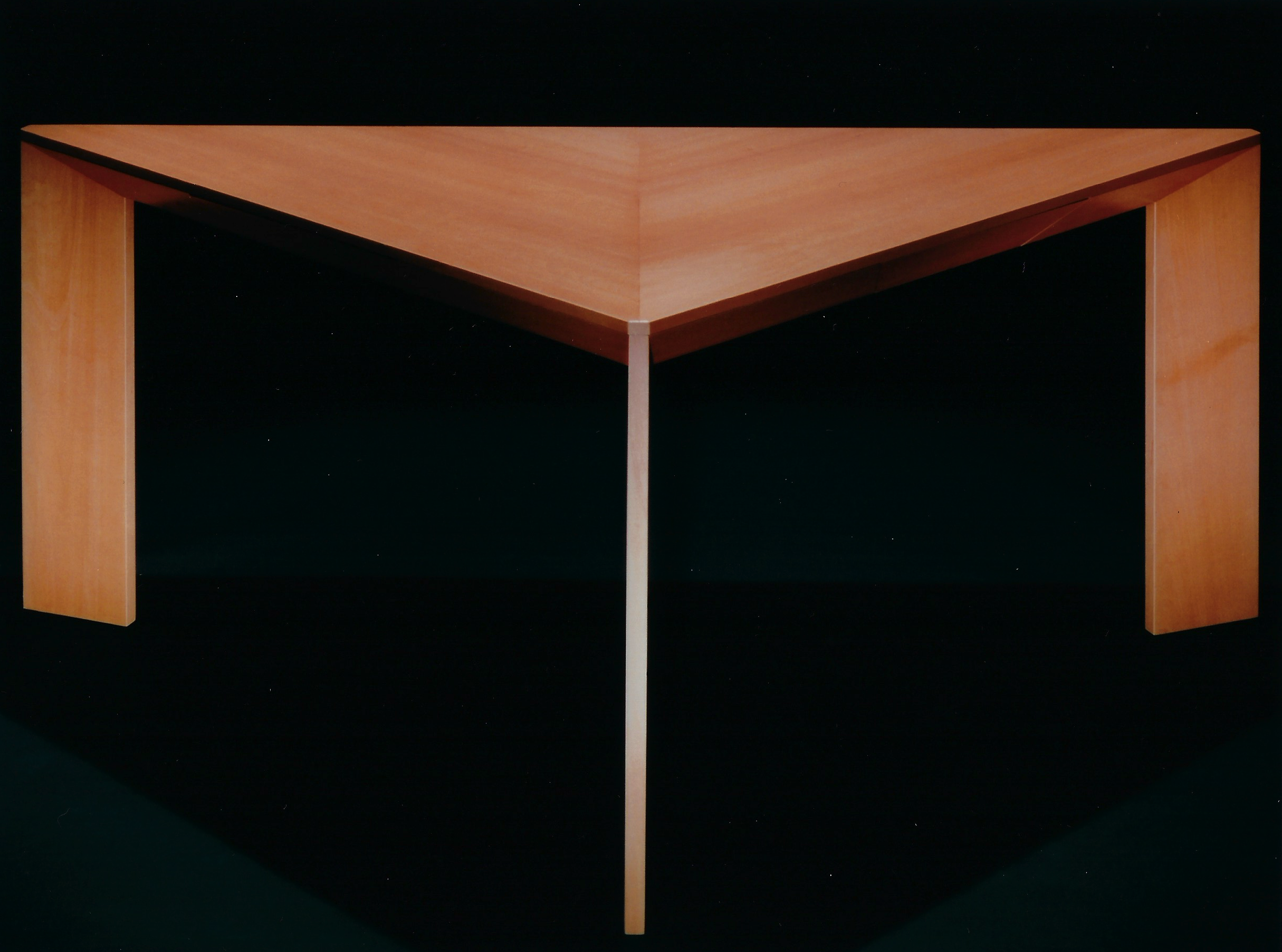
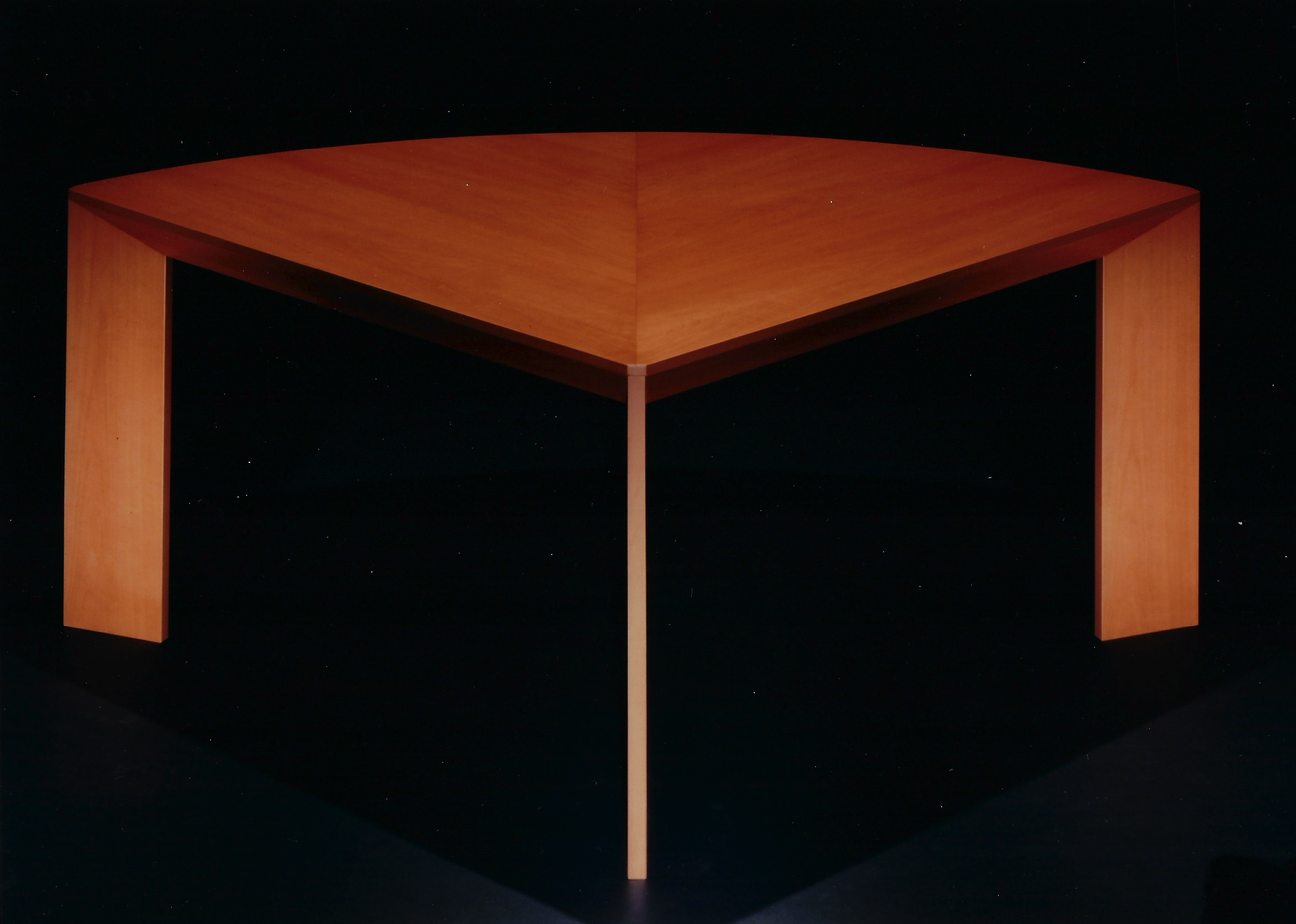
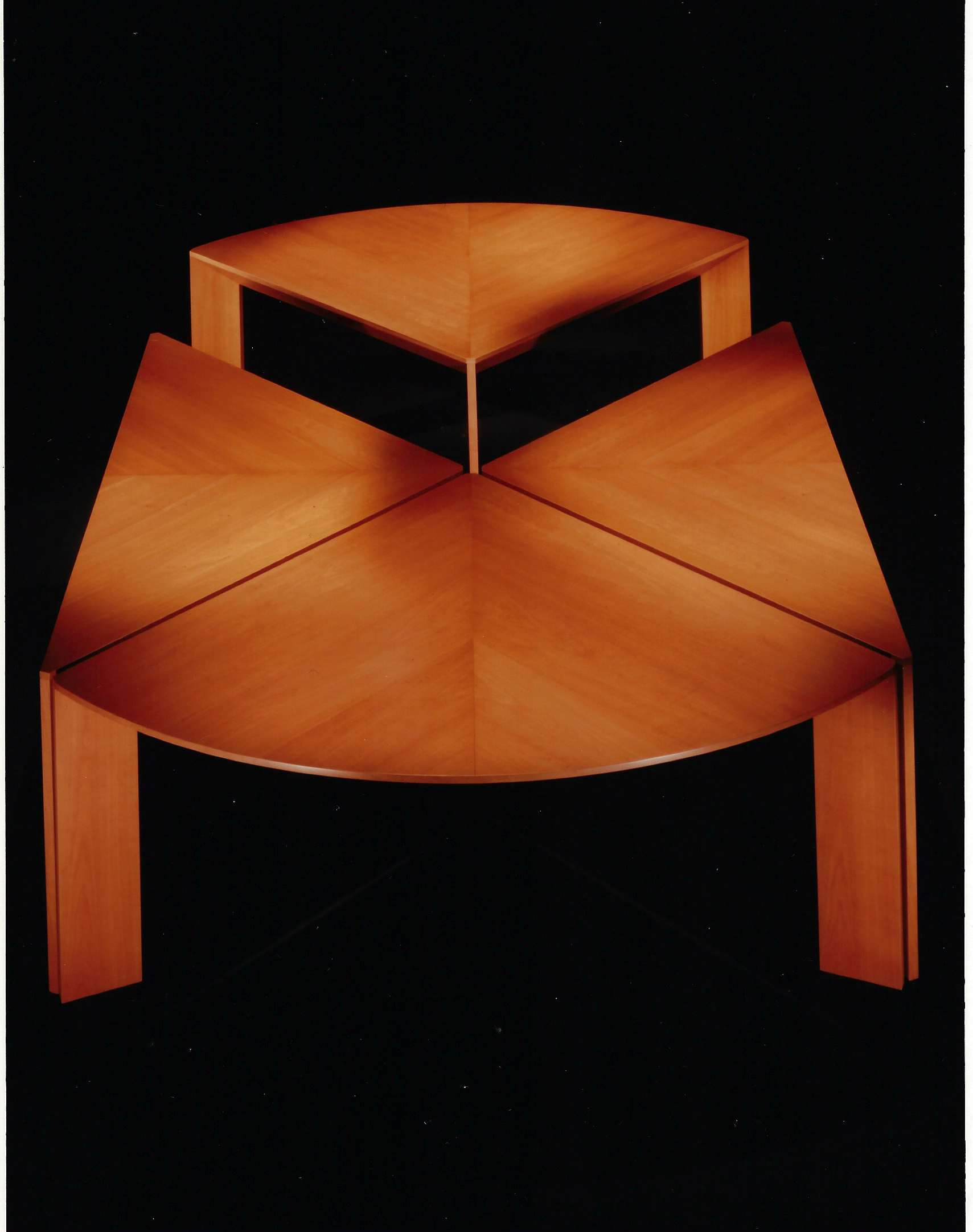
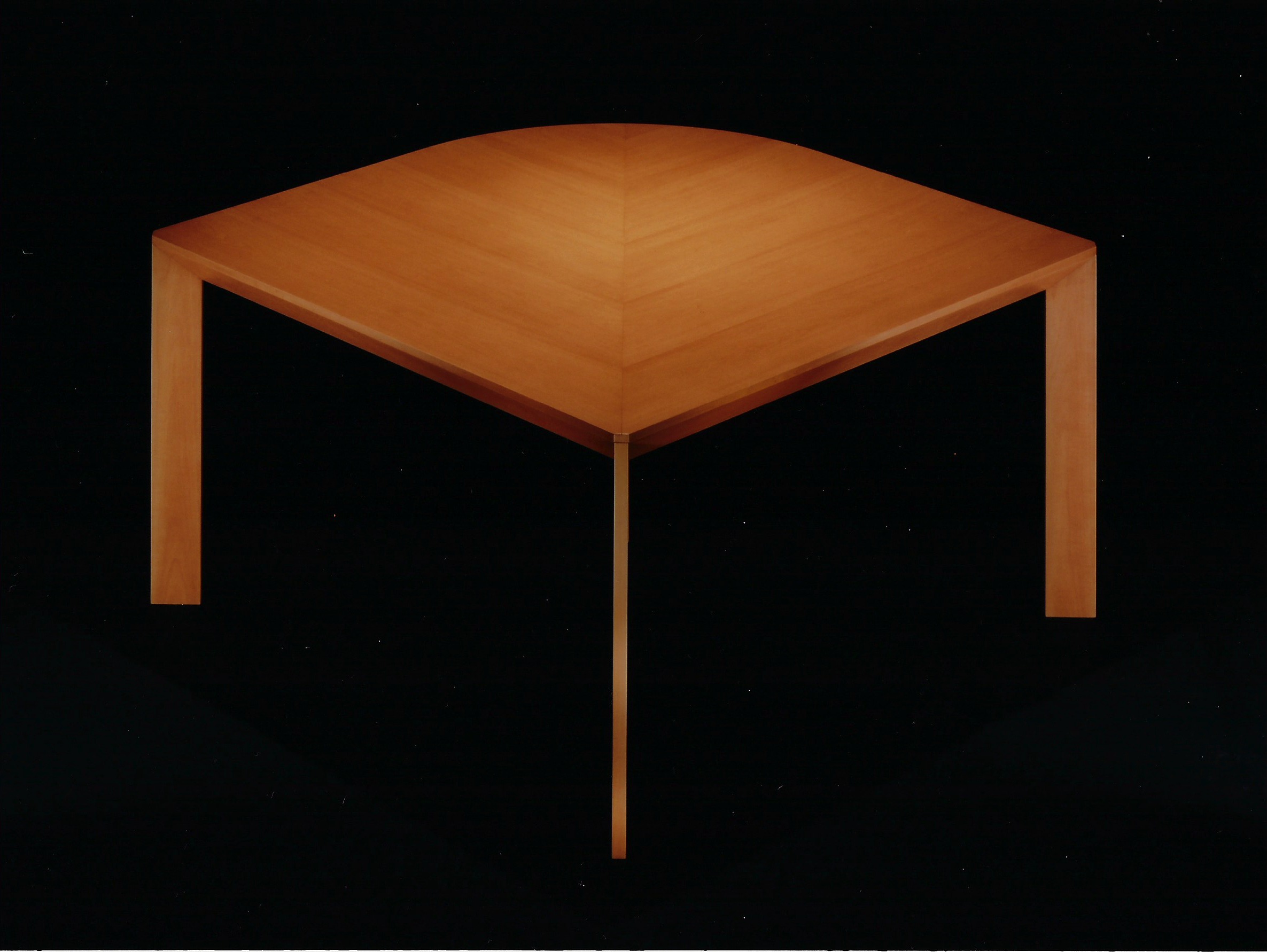
Triangle Table
The Triangle Table begins with geometry rather than gesture.
Its triangular plan is treated as a generative figure, capable of standing alone or aggregating into larger fields, where repetition produces order rather than uniformity. Constructed in pearwood, the table balances planar clarity with structural discipline, allowing thinness without fragility. Detail is subordinated to proportion, and utility is integrated without disturbing the underlying logic of the form.
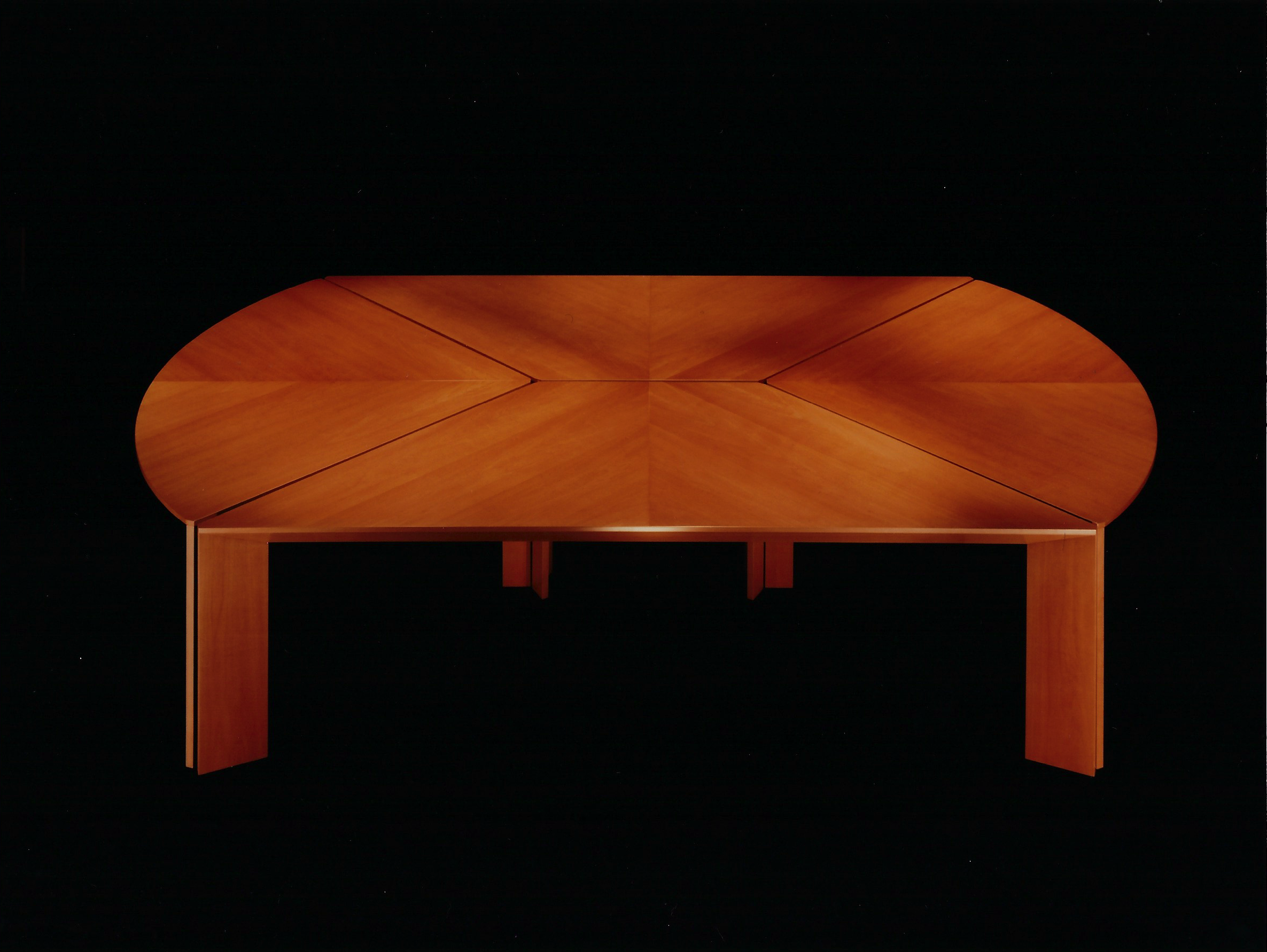
Sector Table
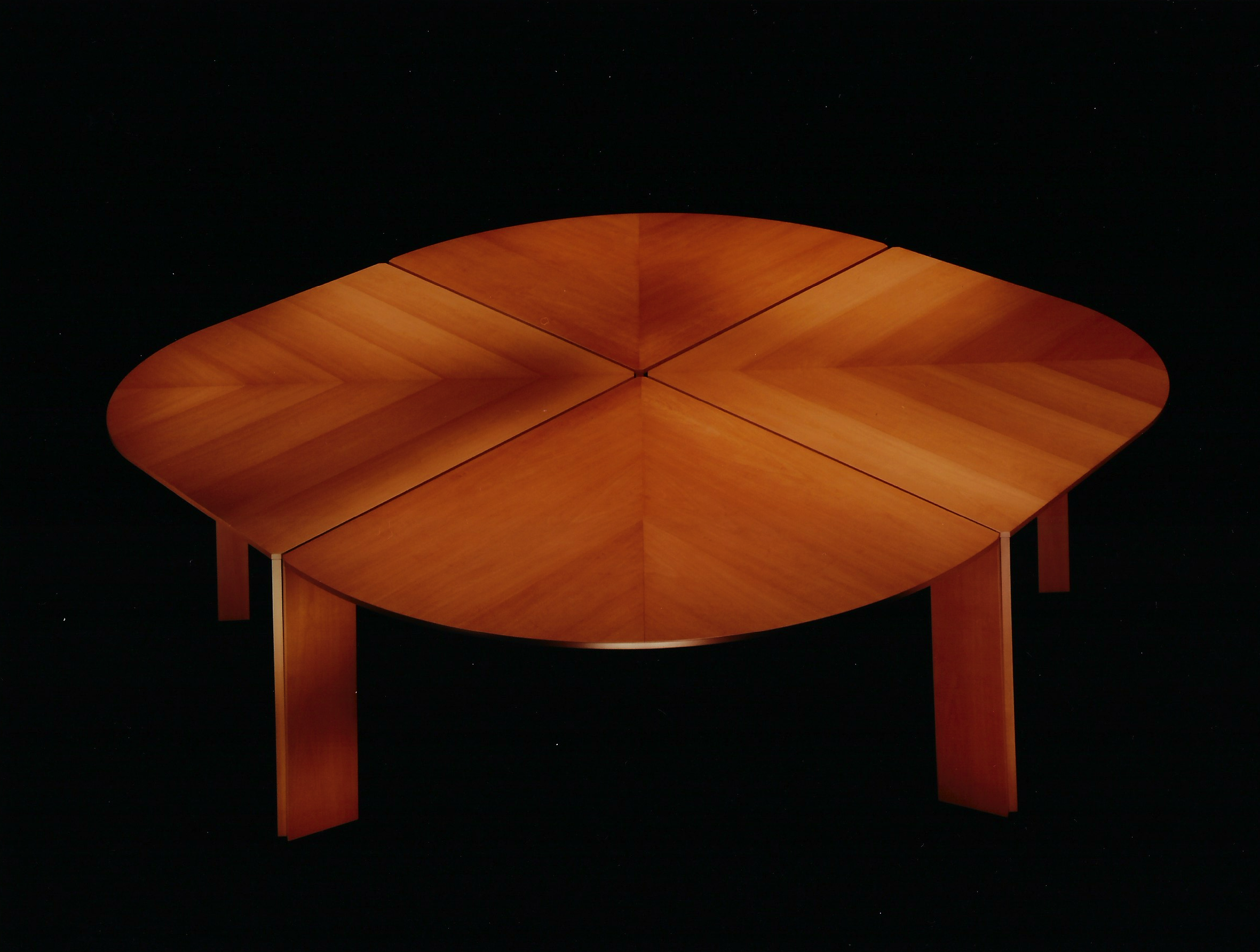
The Sector Table introduces curvature as a counterpoint within the larger family of tables.
Rather than standing alone, it is conceived in relation—aligning, overlapping, and completing adjacent forms through continuity of edge and proportion. Its arc is not ornamental but structural, allowing the table to mediate between straight and angled geometries while maintaining coherence across the group.
Arc Table
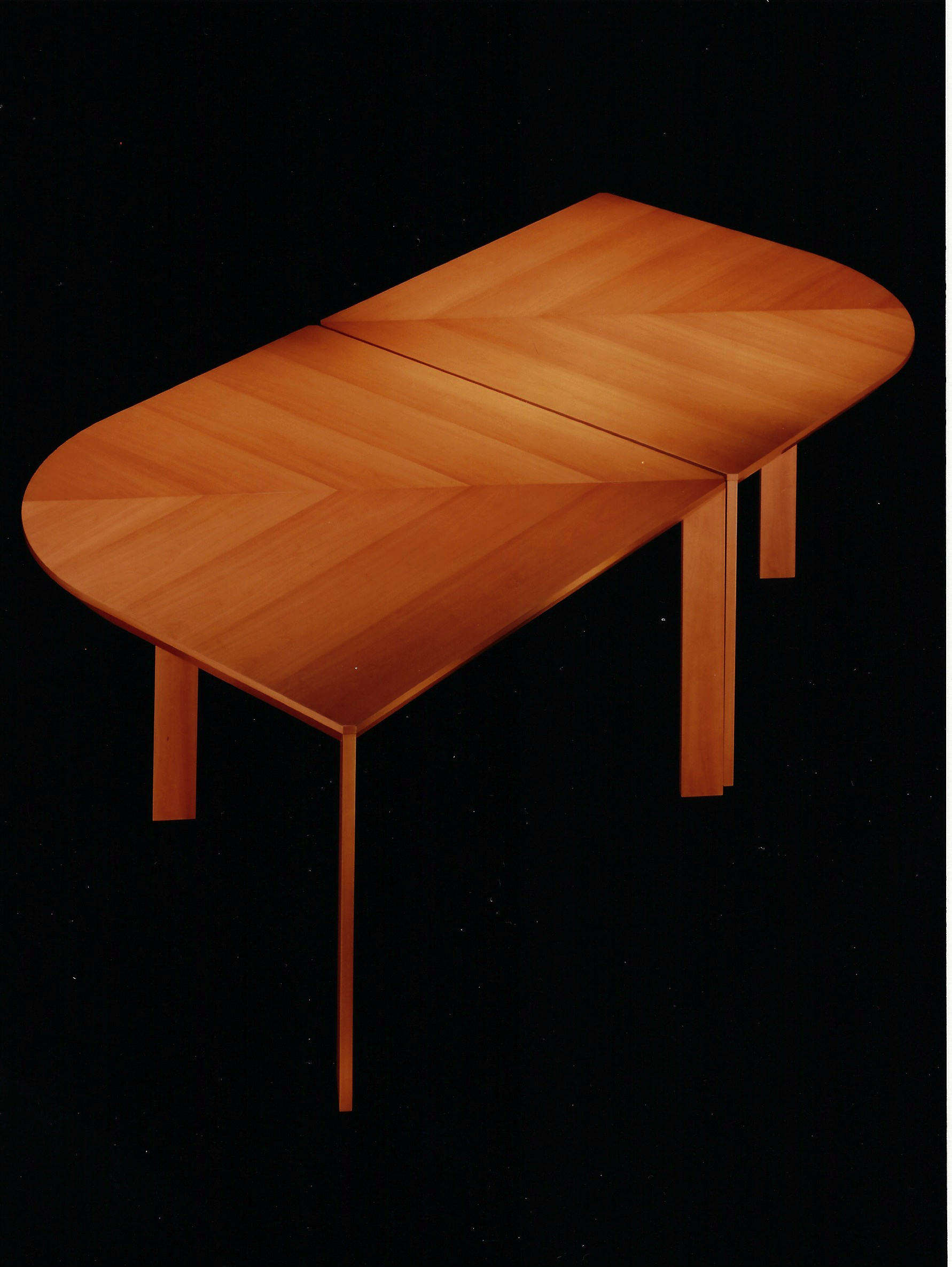
The Arc Table explores continuity through repetition rather than contrast.
Its curved geometry extends across adjacent tables, allowing individual pieces to read as fragments of a larger whole. When repeated, the arc generates rhythm and flow, producing spatial continuity without hierarchy or center.
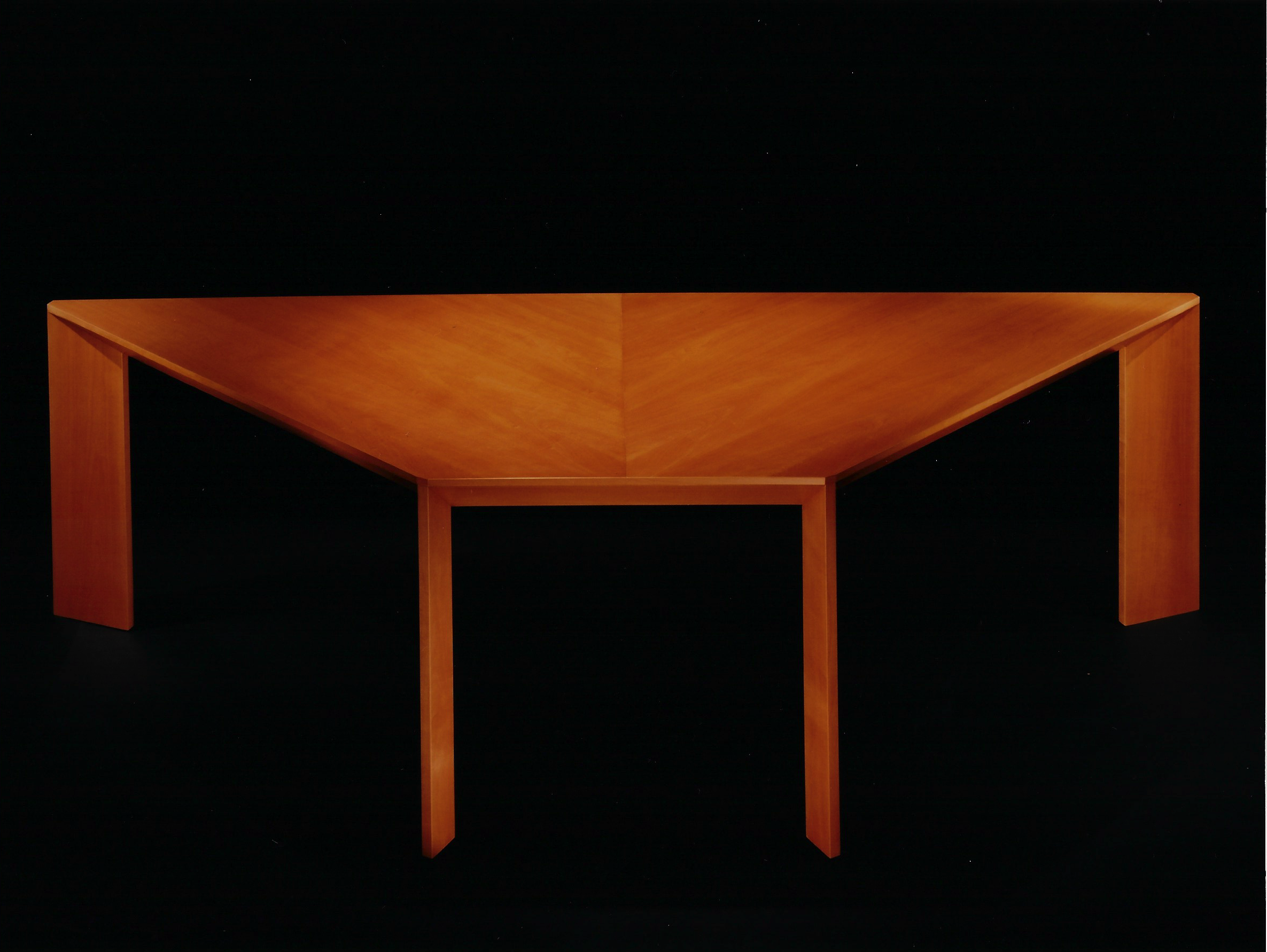
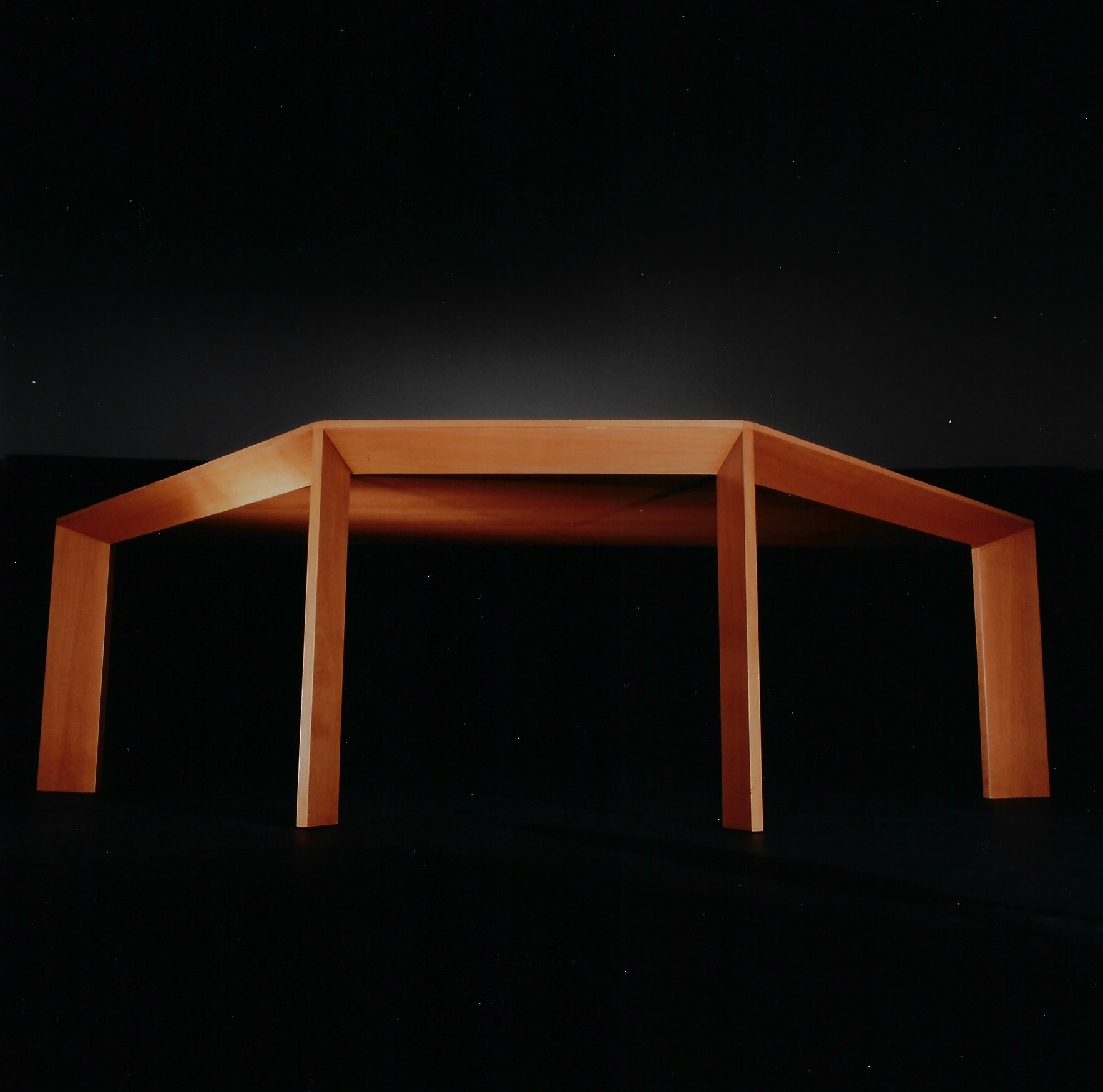
Trapezoid Table
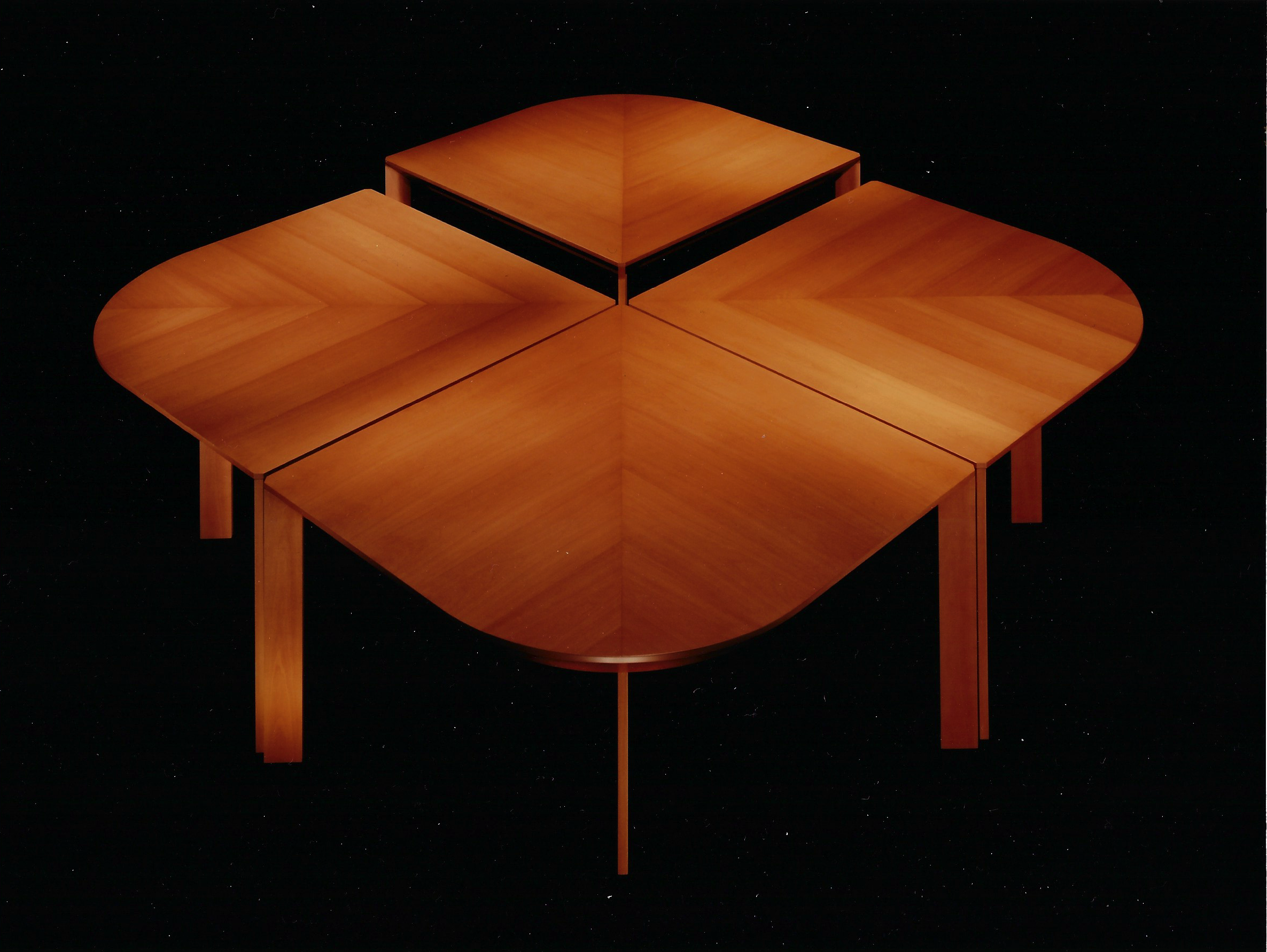
The Trapezoid Table is defined by edge and termination rather than continuity.
Its angled geometry establishes clear boundaries, allowing the table to assert direction and stance within a field of related forms. Where curved tables negotiate adjacency, the trapezoid resolves it—ending space decisively through proportion, thickness, and structural clarity.
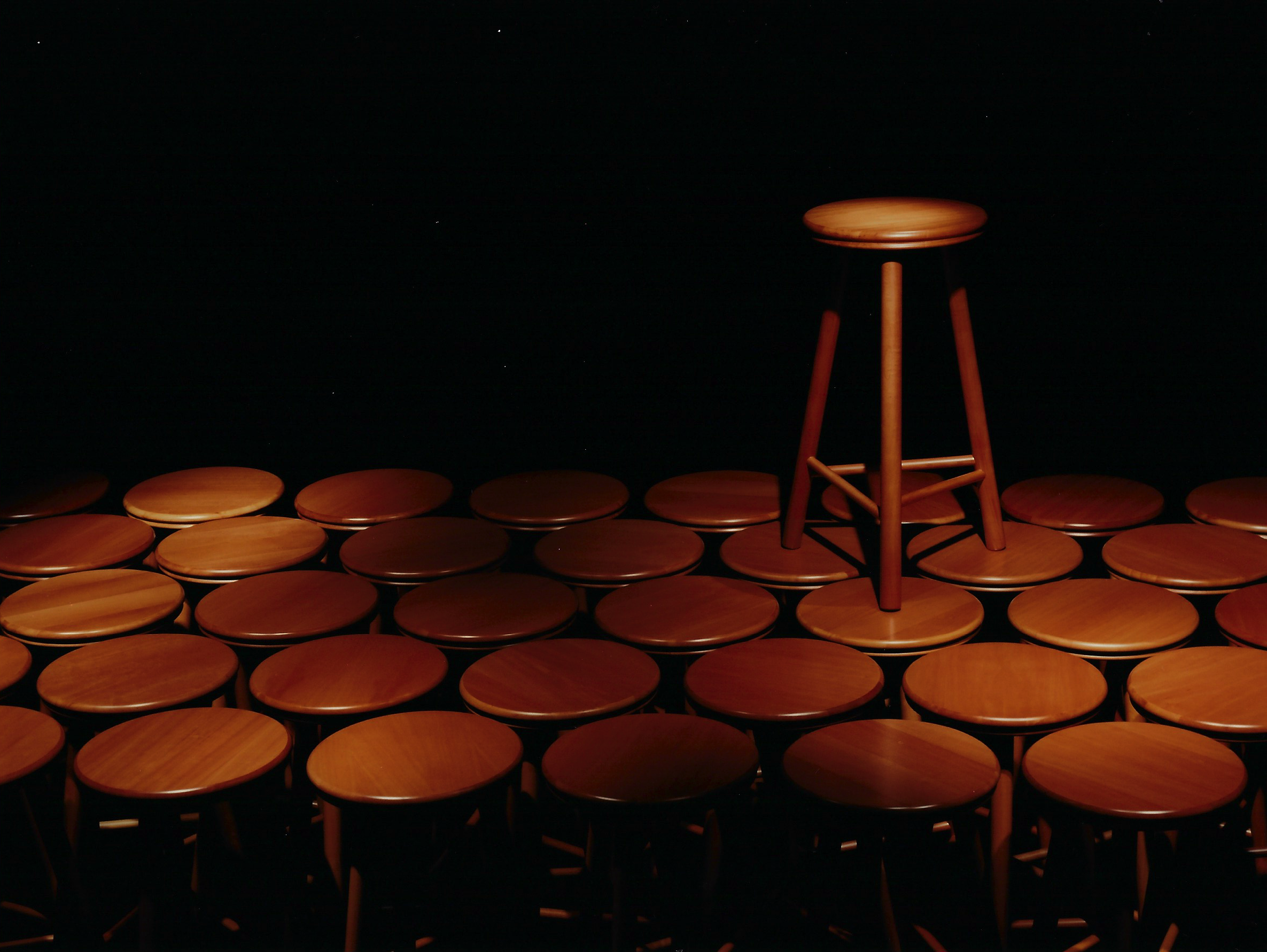
Trio (The Artist’s Stool)
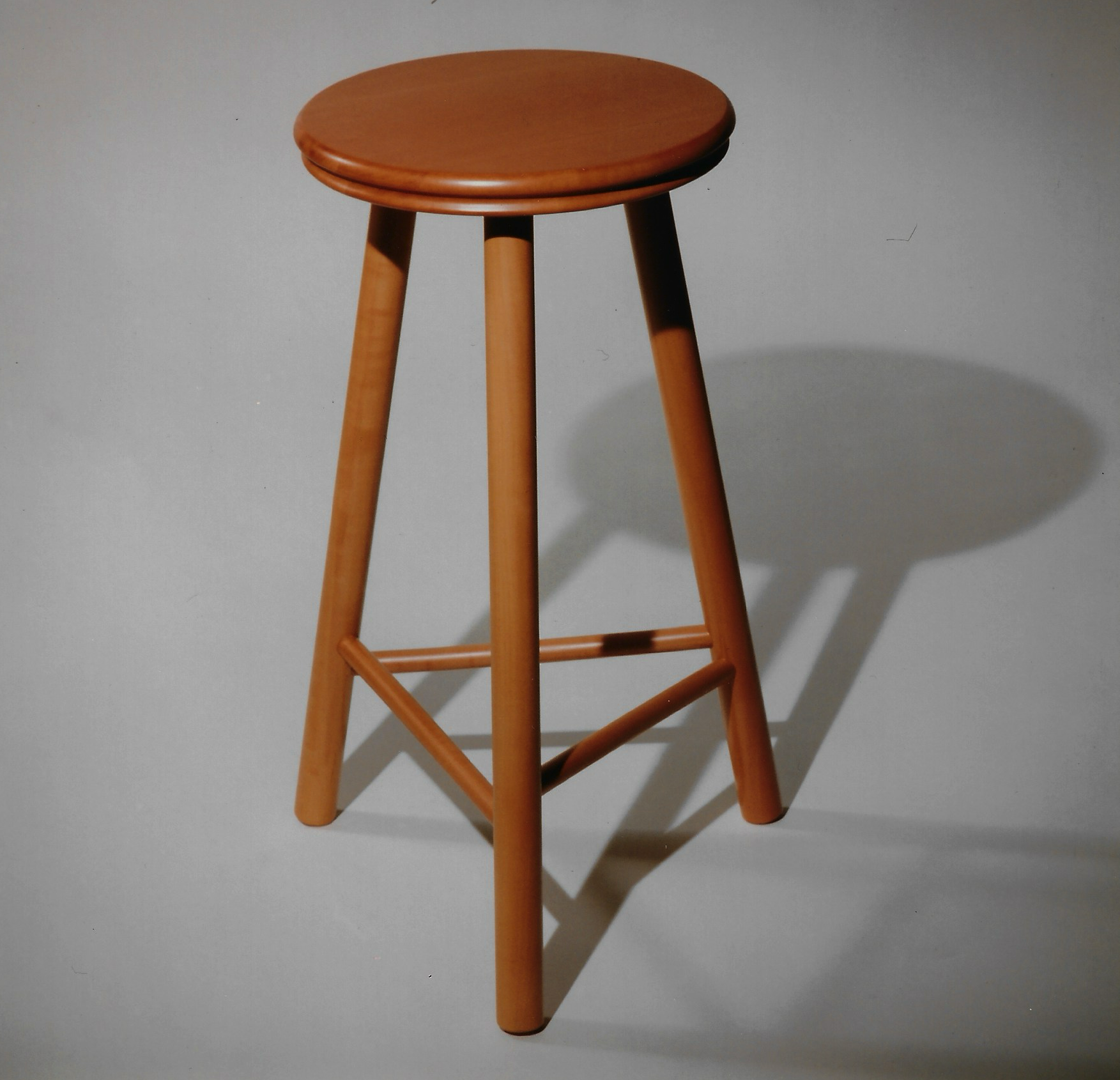
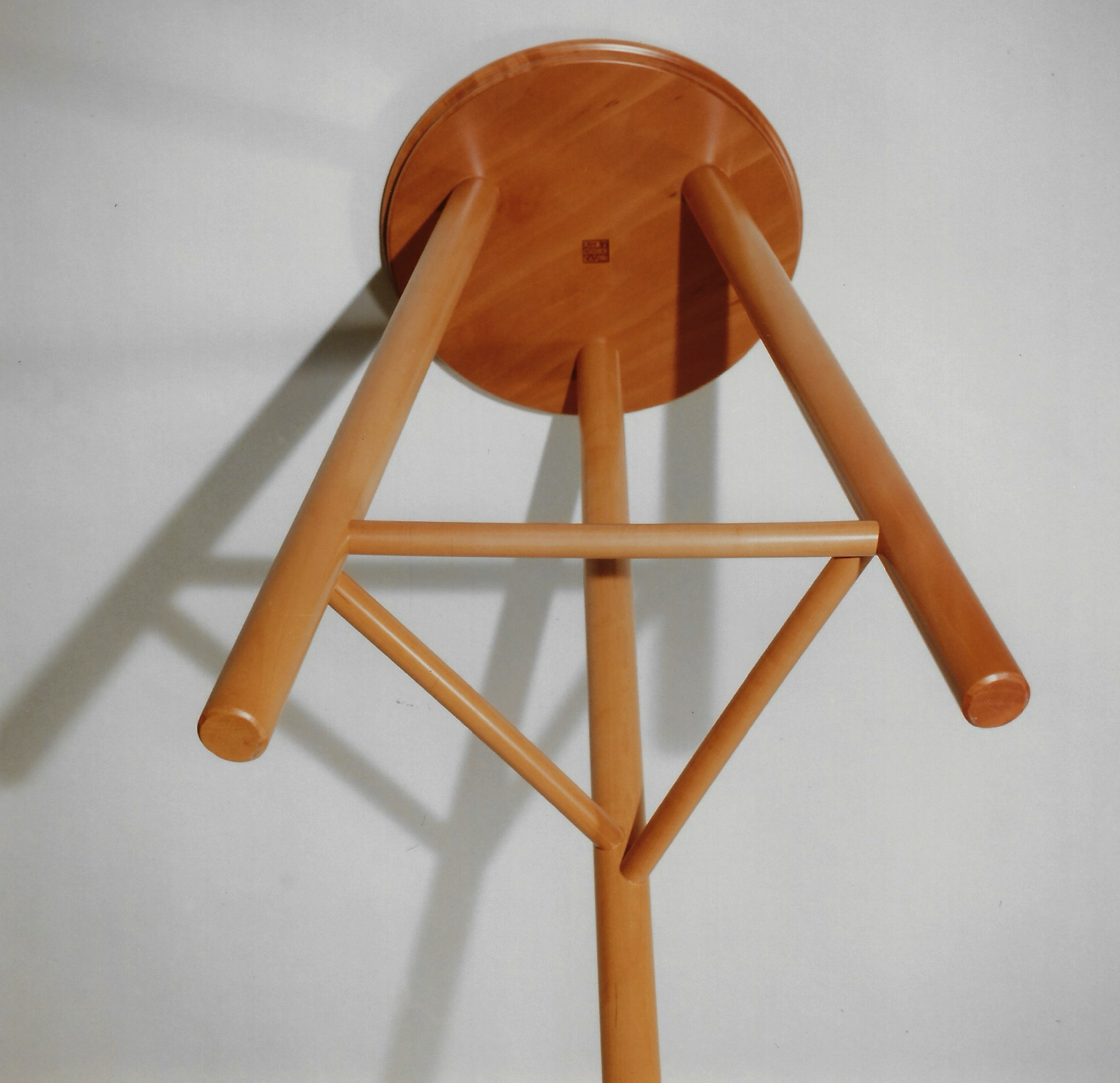
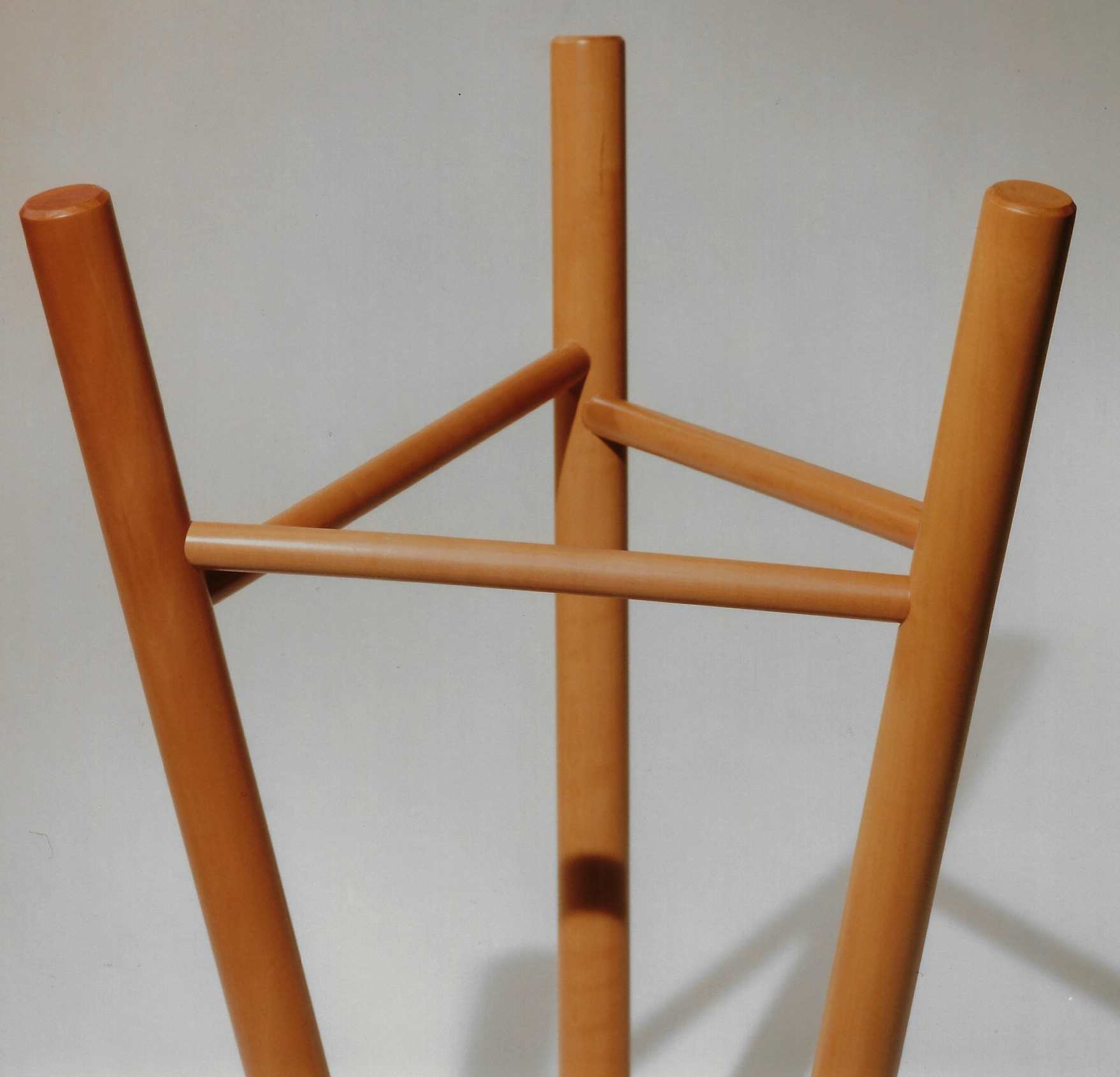
The stool known as Trio was conceived as a simple, portable object—light enough to be carried, stable enough to be trusted. In many ways, it represents a personal interpretation of simplicity: a form reduced to what is necessary, recalling the quiet clarity often associated with Shaker furniture, without imitation or nostalgia.
The name The Artist’s Stool emerged through use rather than intention. During a visit to the painter Wolf Kahn, the stool was carried into his studio under arm. Kahn—both a generous presence and a widely respected figure in contemporary painting—sat on it, considered it briefly, and named it. The designation remained, not as a brand, but as an acknowledgment of purpose: an object defined by how it enters a room, how it is used, and what it quietly supports.
The photography documenting Trio was produced in Milan by Giacomo Artale, whose images situate the stool within an industrial studio setting near the San Siro district. His photographs emphasize repetition, stance, and light, allowing the object to register simultaneously as a utilitarian tool and as a composed presence. The accompanying brochures were designed by Armando Milani, whose graphic restraint reinforces the same values of clarity, proportion, and discipline that shaped the stool itself.